New Survey Across 5 EU Countries Reveals that 63% of LGBTQIA+ Employees Experience Workplace Exclusion due to Microaggressions
DATE:
A first-of-its-kind European survey reveals that 3 out of 5 LGBTQIA+ workers (63%) feel their workplace is not inclusive due to microaggressions they have experienced. The study, titled “European Survey Research on Microaggressions, Language and Overall Wellbeing in the Workplace for LGBTQIA+ People,” highlights how subtle, often unintentional forms of discrimination continue to compromise the psychological safety and professional experiences of millions across the European continent.The research was conducted by Associazione EDGE on behalf of the European Pride Business Network (EPBN) within the Project EPBN – WISE (Workplace Inclusion for a Sustainable Europe). Analyzing a sample of 3,100 respondents across Austria, the Czech Republic, France, Germany, and Italy, the findings were unveiled during the EPBN – WISE Final Conference & Awards Ceremony held May 29, 2026 at the Hilton Prague.
Beyond Formal Compliance: The Weight of Microaggressions
The study identifies microaggressions as everyday slights – including social exclusion, stereotypes, and non-inclusive language – that cumulatively trigger “minority stress”. Unlike overt discrimination, these subtle interactions create a state of chronic hypervigilance and emotional exhaustion.“The research demonstrates that workplace inclusion cannot be reduced to formal compliance,” said Maria Silvia Spinelli, lead researcher for the study. “Everyday language, behaviors and organizational culture have a profound impact on the wellbeing and dignity of LGBTQIA+ people. Building inclusive workplaces is both a human rights imperative and a strategic investment in sustainable, productive organizations.”Dr. Maria Silvia Spinelli, lead researcher for the study, is presenting the results at the EPBN – WISE Final Conference & Awards Ceremony held May 29, 2026 at the Hilton Prague.Christophe Margaine, EPBN – WISE Project Manager and EPBN Vice Chair, added: “The EPBN – WISE project has provided us with the measurable evidence needed to move the needle. We are no longer guessing: we now have the tactical tools to help companies address the invisible barriers that hinder talent and innovation. It is of the utmost importance to assess through such surveys that discrimination and micro-aggressions are not a feeling from people, but it is an everyday reality issue in the workplace. A low inclusive organization will have a high level of micro-aggressions. Thanks to this survey, we confirm the reality of these micro-agressions, and the relationship with language and DEI policies. This first European survey is unique and valuable.”“The fact that 63% of LGBTQIA+ workers still face non-inclusive environments shows that legal rights alone aren’t enough; we need deliberate leadership to combat the daily reality of microaggressions. At EPBN, we bridge this gap by connecting 27 organizations across 23 countries to turn high-level protections into a measurable, daily standard for nearly 40 million people. True inclusion isn’t about checkboxes, it’s about creating a safe harbor where professionals no longer feel forced to choose silence over authenticity,” adds Matthias Weber, EPBN Founder & Chairman.
The European Context: A Decade of Stagnation
The EPBN – WISE findings provide critical local depth to broader data from the European Union Agency for Fundamental Rights (FRA) report “EU LGBTIQ Survey III: LGBTIQ Equality at a Crossroads: Progress and Challenges”, the largest European survey of its kind, involving more than 100,000 respondents across the 27 EU Member States. According to the report, workplace discrimination continues to represent one of the most critical areas of inequality for LGBTQIA+ people in Europe. The FRA’s 2024 report also indicates that workplace discrimination levels have not substantially decreased in a decade. Against this backdrop, the EPBN – WISE research aims to transform microaggressions from an invisible phenomenon into a measurable metric, supporting evidence-based recommendations for employers and policymakers.What Are Microaggressions and What Impact Do They Have?Microaggressions are subtle, everyday forms of discrimination that target a person’s identity, often through language, behaviours, assumptions or social interactions. Unlike explicit acts of discrimination, microaggressions are frequently indirect or even unintentional, yet they can have a significant cumulative impact on LGBTQIA+ people in the workplace.Research generally identifies three main forms of microaggressions:
Micro-assaults: explicit and deliberate discriminatory acts or offensive language, such as using homophobic expressions or derogatory jokes;
Micro-insults: subtle comments or behaviours that demean or stereotype a person’s identity, often presented as “normal” or socially acceptable;
Micro-invalidations: statements or attitudes that minimise, deny or question someone’s identity or lived experience, for example comments such as “you don’t look gay” .
These dynamics are closely connected to the concept of Minority Stress Theory developed by psychologist Ilan Meyer (2003). According to this framework, LGBTQIA+ people experience additional forms of stress linked to stigma, discrimination and social exclusion beyond ordinary everyday stressors.In workplace environments, repeated exposure to microaggressions can generate a state of chronic linguistic hypervigilance, emotional exhaustion and anticipation of rejection. Even seemingly minor interactions, when repeated over time, may contribute to anxiety, reduced psychological safety, lower productivity and a diminished sense of belonging. And, consequently producing negative impacts on the organizational well-being of the entire organization and on its productivity.As highlighted by the EPBN – WISE research, stigma is not always and not only expressed through overt discrimination; it is often reproduced daily through language, invisible exclusions and subtle social dynamics that cumulatively affect wellbeing and inclusion.
The Power of Language and Organizational Wellbeing
Alongside behavioral microaggressions, language is a central vector through which social hierarchies are constructed and reproduced in organizational contexts. The terms used to describe LGBTQIA+ people are not semantically neutral in all languages considered: their meaning and affective impact vary depending on the context of use, the relationship between who speaks and who listens, the historical and cultural background of the term, and the identity of the speaker.The language used in the workplace is one of the most powerful tools through which social norms related to gender and sexual orientation are constructed, reproduced, and sometimes challenged. In recent decades, a growing body of research has highlighted how linguistic choices within organizations, from formal communications to informal conversations, from company policies to everyday vocabulary among colleagues, have a significant influence on the work experience of LGBTQIA+ people .
The Research Hypotheses
The research was based on the hypothesis that perceptions of workplace inclusivity are closely linked to the frequency of microaggressions, the perception of language and overall wellbeing among LGBTQIA+ employees.
More specifically, the study explored whether:
higher levels of perceived inclusivity are associated with fewer reported microaggressions;
more inclusive environments correspond to less negative perceptions of workplace language;
increased exposure to microaggressions is linked to more negative evaluations of formal and informal workplace language;
negative language experiences contribute to higher levels of anxiety and reduced workplace wellbeing.
The Objectives of the Research
The survey was designed to:
assess the prevalence and perception of workplace microaggressions affecting LGBTQIA+ people;
analyse the relationship among language, microaggressions, well-being and anxiety for LGBTQIA+ employees in the workplaces;
evaluate the relationship between workplace inclusion and overall wellbeing;
transform microaggressions from an invisible phenomenon to a visible and, above all, measurable phenomenon
support the development of evidence-based recommendations for employers, policymakers and European institutions.
Overall, the research aimed to investigate how organisational culture, language and everyday interactions influence psychological safety, wellbeing and inclusion in professional environments.
Methodology
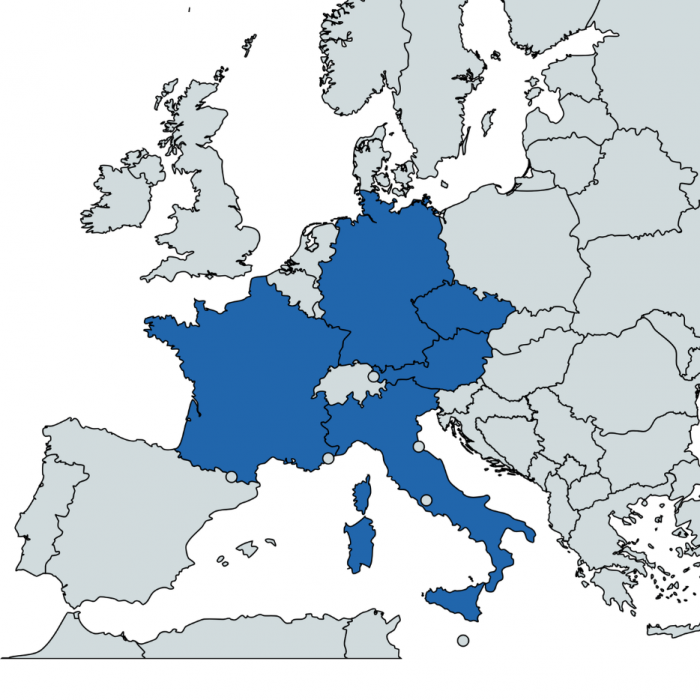
The European survey collected data from LGBTQIA+ respondents across 5 European countries (Italy, Germany, France, Czech Republic and Austria).The research explored:
experiences of workplace microaggressions and discriminatory behaviours;
the use of inclusive and non-inclusive language;
perceptions of psychological safety and organisational support;
the relationship between workplace experiences (language and microaggressions) and mental wellbeing.
The following section outlines the key socio-demographic data of the 3,069 respondents.
Key Findings and consequences on the policies and solutions to be adopted.
The research highlights several critical trends affecting LGBTQIA+ employees in Europe.
Workplace Microaggressions Remain Widespread and LGBTQIA+ workers face systematic microaggressions even in formally inclusive settings, with persistent disparities in wellbeing compared to heterosexual/cisgender peers.
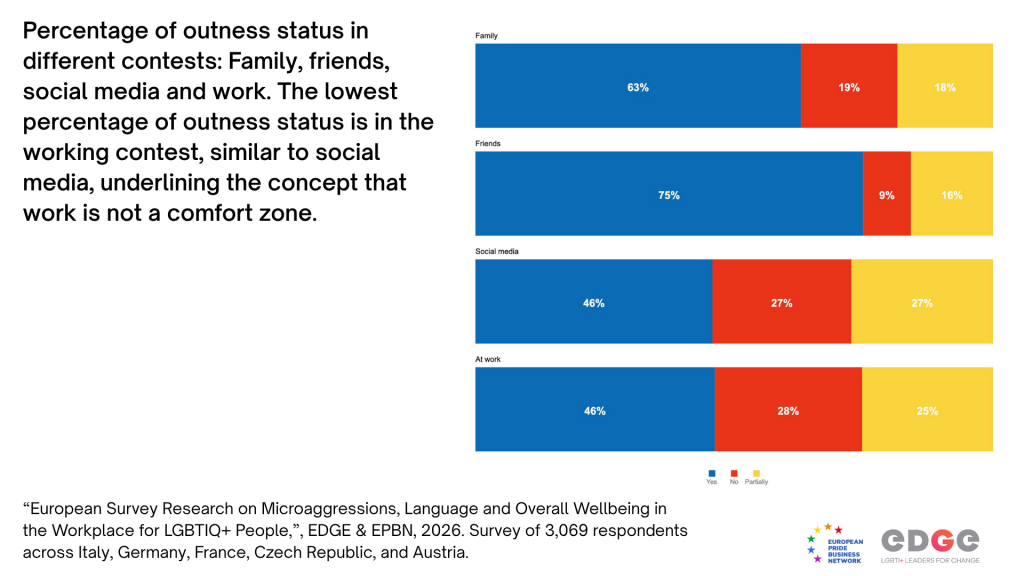
The survey aimed to assess workplace inclusivity for LGBTQ+ employees. The response categories were qualitative, indicating perceptions of inclusivity. Respondents reported frequent exposure to subtle forms of discrimination, including stereotyping, exclusionary jokes, assumptions regarding gender identity or sexual orientation, and invalidating language. The dominant perception is that 3 out of 5 LGBTQIA+ workers (63% of respondents) do not think their workplace is inclusive (people who answered “not at all”, “a little” or “partially”) due to the microaggressions suffered and the non-inclusive use of language relating to sexual orientation and gender identity adopted.
Language Has a Direct Impact on Wellbeing. Language is not neutral: the terminology used to describe LGBTQIA+ identities in professional contexts has measurable effects on anxiety, wellbeing and career perception. The speaker effect is significant: the same terms carry different valence depending on whether spoken by in-group or out-group members.
The survey confirms a strong correlation between inclusive workplace language and employees’ sense of belonging, psychological safety and wellbeing.Conversely, recurring exposure to non-inclusive language and microaggressions contributes to stress, disengagement and reduced trust in organisational culture.To assess all correlations, both positive and negative, the so-called Sperman scale was used, and based on the collected responses, the following conclusions were drawn:
the perceived impact of language used to describe sexual orientation and gender identity is significantly more negative when used by a person who is not a member of the LGBTQIA+ community;
the perceived impact of language used to describe sexual orientation and gender identity is associated with the frequency of anxiety symptoms;
the perceived impact of language is associated with workers’ overall well-being at work; the worse the perception of non-inclusive use, the lower the level of well-being. The most pronounced effects concern the sense of acceptance, inclusion, and the ability to be oneself; overall mental well-being also shows a significant negative correlation. The perceived impact on career and professional perception amplifies the association, while the impact on job quality shows more limited negative effects.
Fig. 6 a-b above: shows the distribution of responses to the questions of the scale used to assess microaggressions, validated on the LGBTQIA+ population, the LGBTQIA+ Microaggression Experience at Work Scale (MEWS). Two domains of microaggressions are identified: personal and professional, with a highly significant correlation, meaning that individuals who report professional microaggressions also experience personal ones, although professional microaggressions yielded lower and more homogenous values than personal microaggressions.
Fear of Visibility and Self-Censorship Persist
Many respondents reported limiting self-expression in professional contexts due to concerns about discrimination, reputational impact or career consequences. There is a correlation between language and microaggressions indicates that those who report more microaggressions are more sensitive to the use in a non-inclusive manner of identity terms such as gay and lesbian in the workplace and demonstrate hypersensitivity to the language to which those most exposed to microaggressions are exposed over time.
Policies Alone Are Not Sufficient. Organisational inclusivity is the strongest protective factor identified: it reduces both microaggression exposure and their psychological impact.
While many organisations formally adopt diversity and inclusion policies, respondents highlighted gaps between institutional commitments and everyday workplace culture. The findings suggest that effective inclusion requires not only formal policies, but also leadership accountability, continuous training and cultural transformation starting from the attention that must be paid to transforming microaggressions from an invisible phenomenon to a visible and therefore measurable phenomenon and to paying specific attention to the language that is used in order to build the solutions, processes and activities most suitable for creating truly inclusive workplaces.Policy Implications and RecommendationsThe findings underline that there is a role not only for employers but more generally for everyone and the need for stronger and more systemic approaches to workplace inclusion across EuropeThe research calls for:
stronger implementation of anti-discrimination frameworks;
mandatory and continuous inclusion training;
the adoption of inclusive language guidelines and communication standards;
improved reporting and accountability mechanisms;
mental health and wellbeing support specifically addressing LGBTQIA+ workplace experiences;
greater alignment between European equality objectives and workplace practices.
The report also emphasises the importance of integrating LGBTQIA+ inclusion into broader sustainability, wellbeing and ESG strategies.



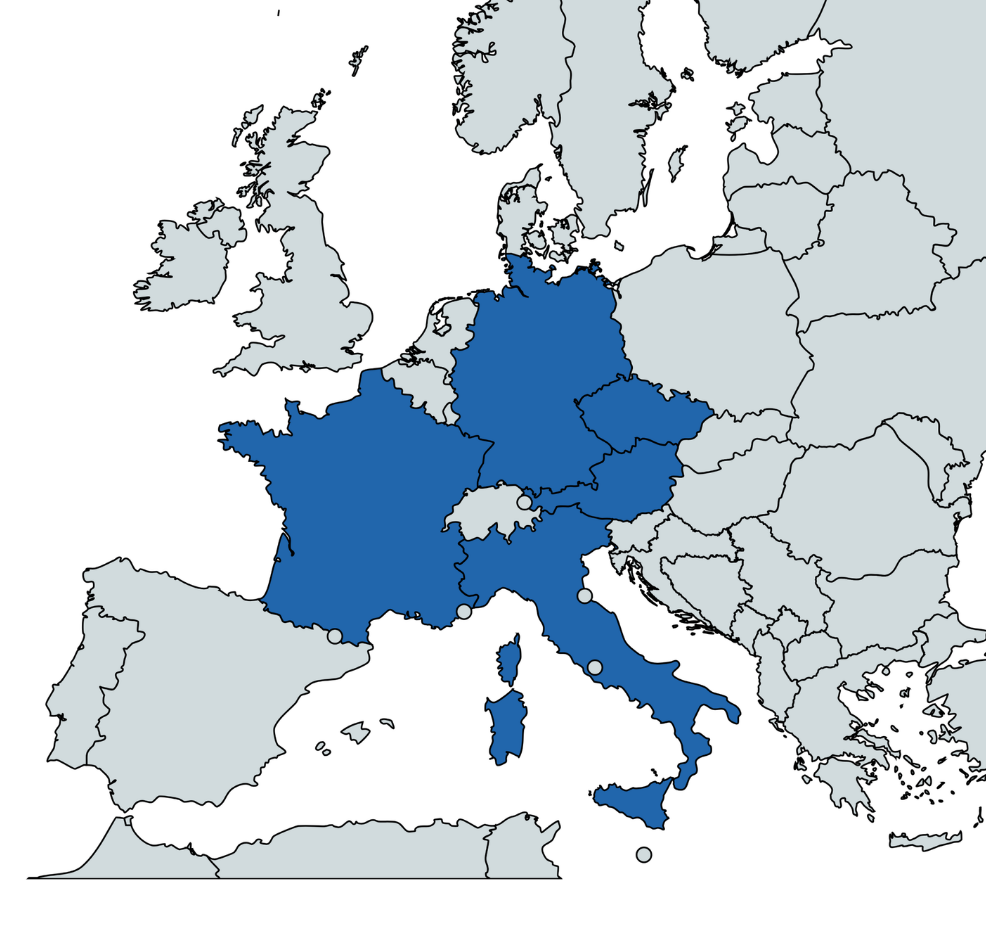
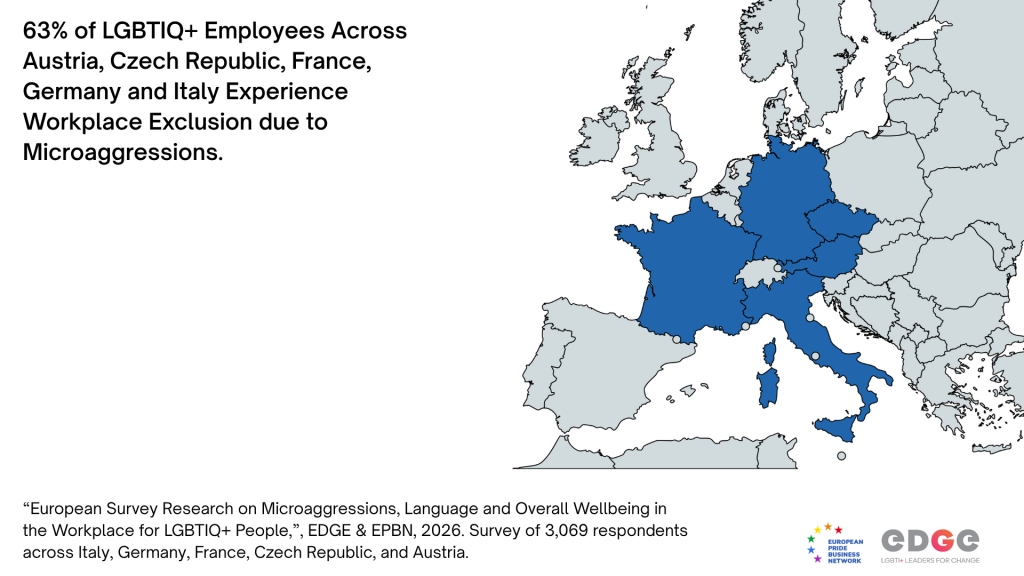
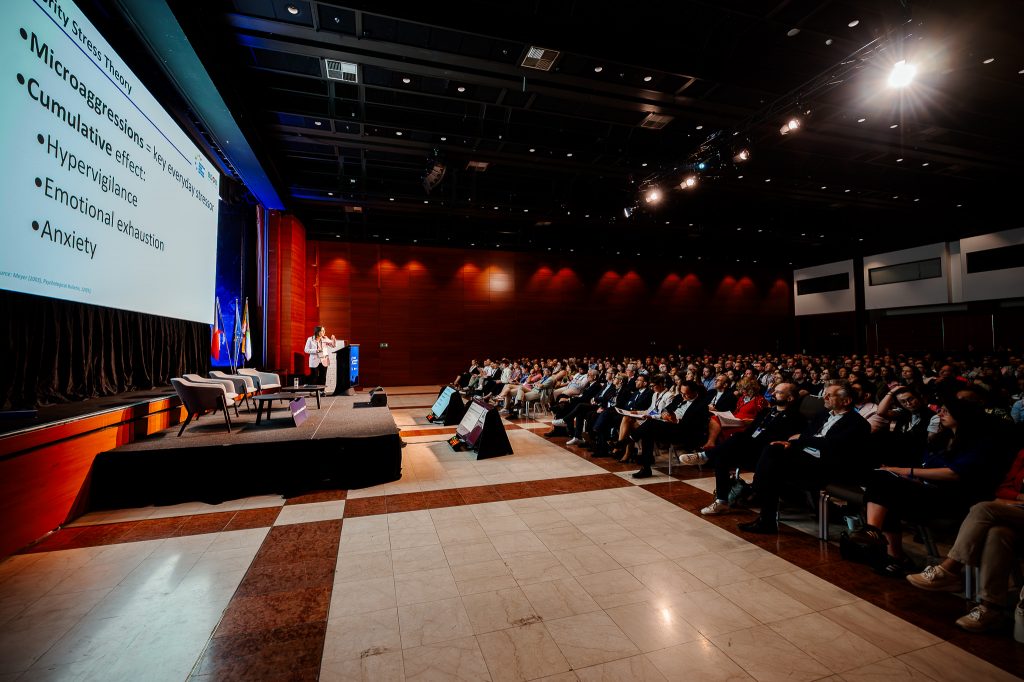
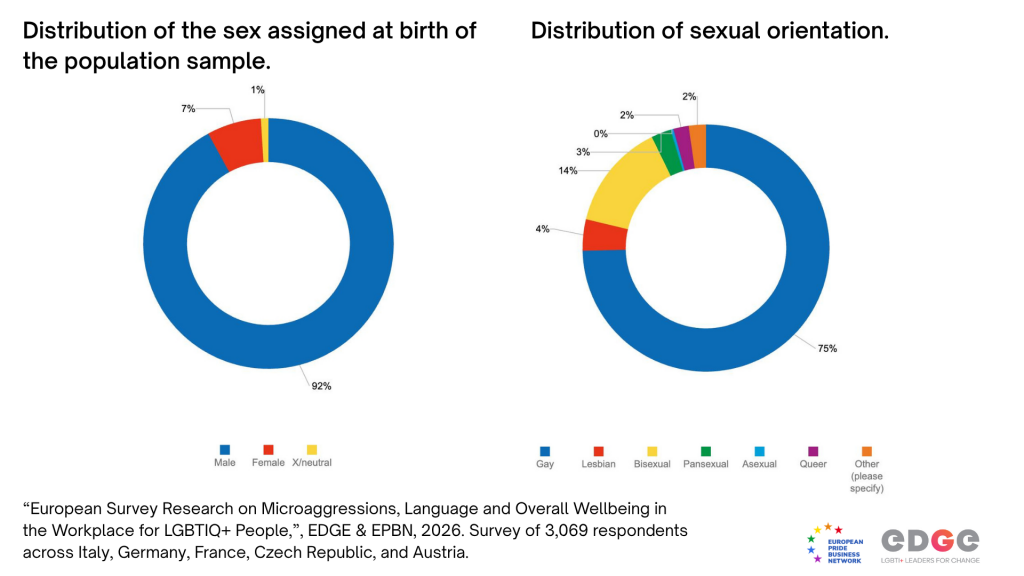
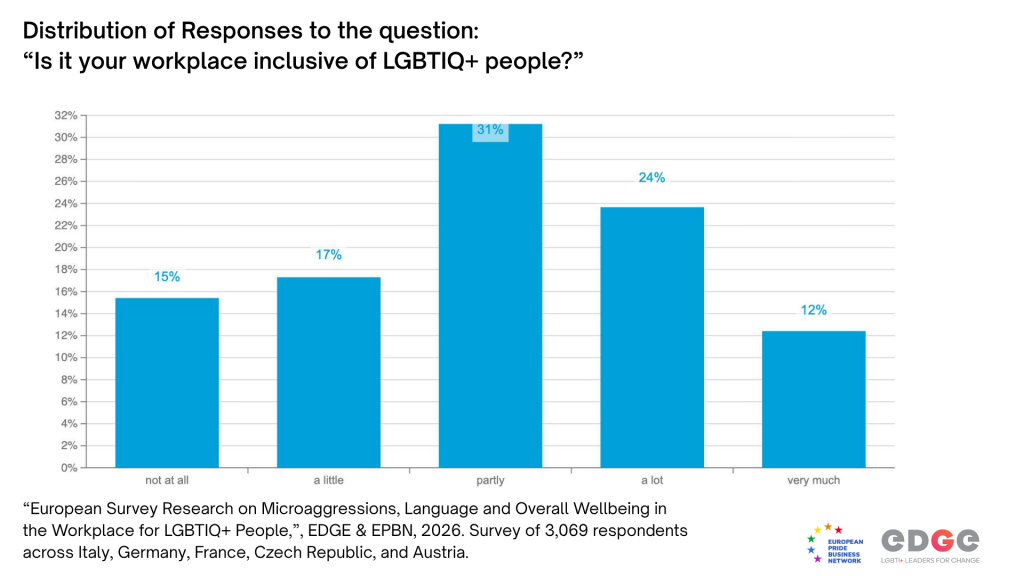
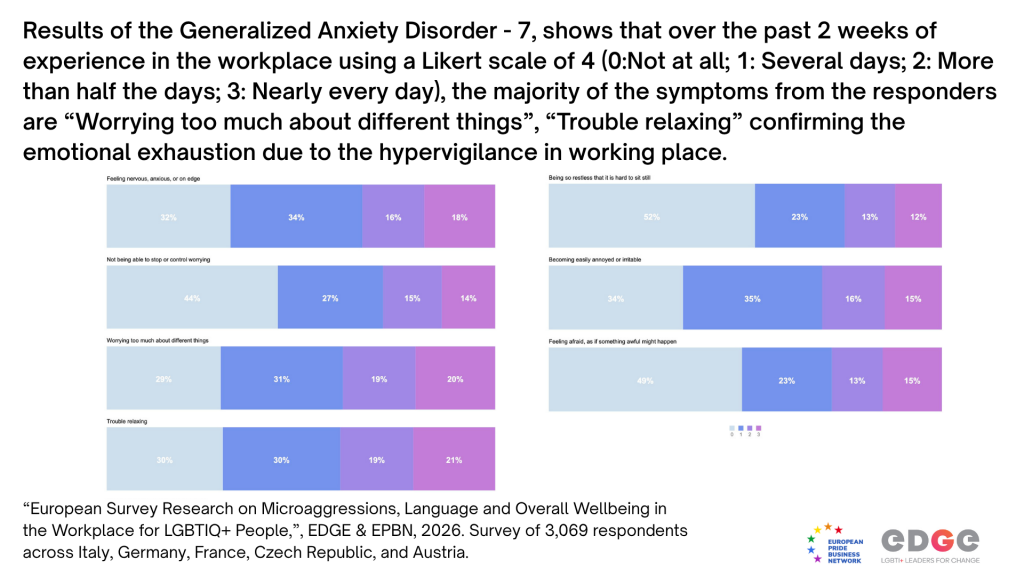
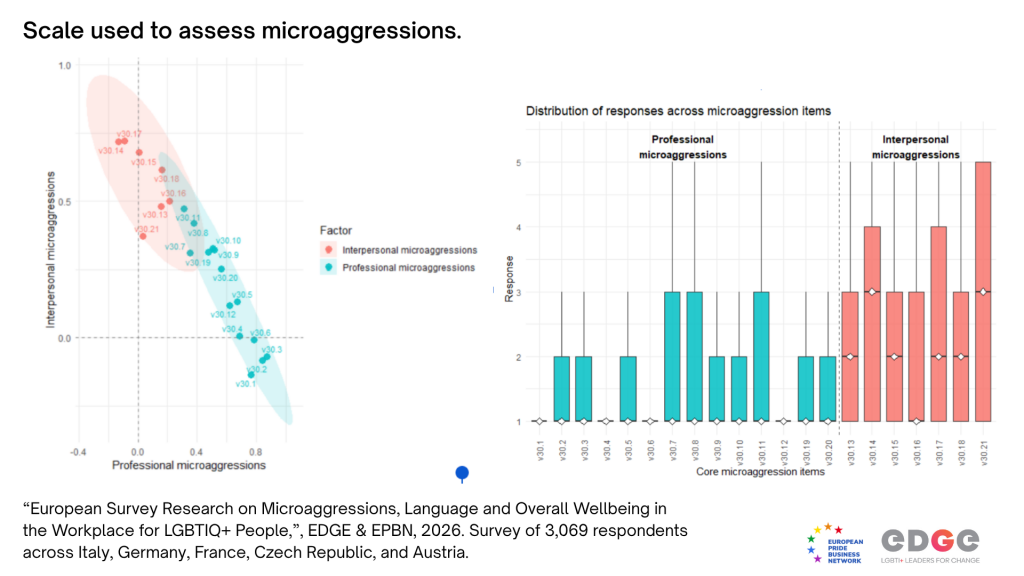 Fig. 6 a-b above: shows the distribution of responses to the questions of the scale used to assess microaggressions, validated on the LGBTQIA+ population, the LGBTQIA+ Microaggression Experience at Work Scale (MEWS). Two domains of microaggressions are identified: personal and professional, with a highly significant correlation, meaning that individuals who report professional microaggressions also experience personal ones, although professional microaggressions yielded lower and more homogenous values than personal microaggressions.