Under the Advocacy programme of PLANET EPBN, two online webinars in 2026 brought almost 100 participants face to face with the people who shape European equality law: a senior official from the European Commission, and an Advocate General of the Court of Justice of the European Union.
Equality in Europe is written in one place and enforced in another. Most advocacy work engages with only one of them. In 2026, EPBN set out to give its members both, through two one-hour webinars under the Advocacy programme of PLANET EPBN. Together they drew almost 100 participants: member organisations, mentees from the EPBN Mentoring programme, Role Models, partners and the wider EPBN community.

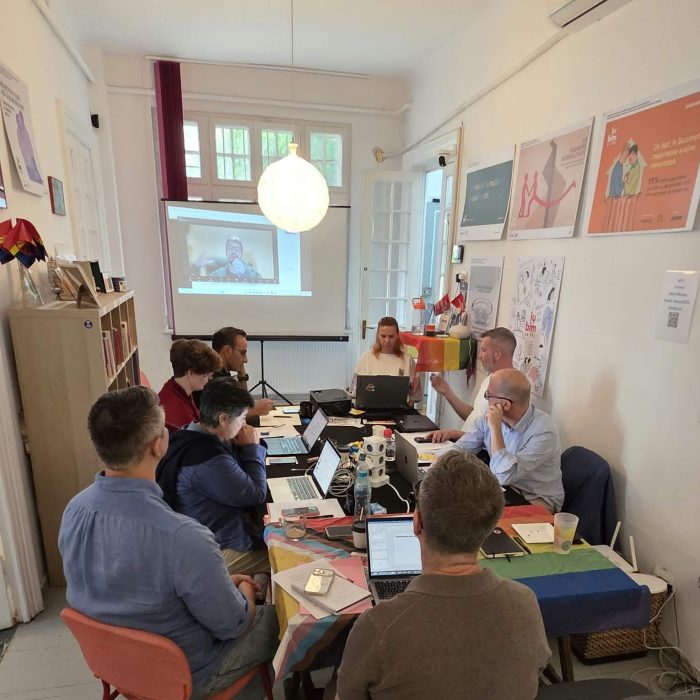
The first, on 29 April, was Shaping the EU LGBTIQ+ Strategy 2026–2030. Our guest was Nadège Defrère, Team Leader for Non-Discrimination at the European Commission’s Directorate-General for Justice and Consumers. Forty-six participants heard directly how the Commission sets its priorities on LGBTQIA+ equality, and what those commitments are meant to mean for employers and for advocacy at national level. Lucia Urciuoli, EPBN’s Advocacy Manager, moderated the discussion that followed.
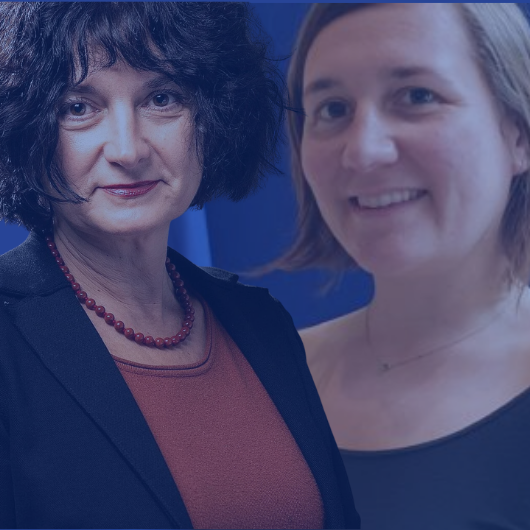
 The second, on 21 October, moved from policy to the courtroom. Landmark Rulings of the Court of Justice of the EU and the Growth of Equality for LGBTIQ+ People brought 47 participants together with Tamara Ćapeta, Advocate General at the Court of Justice of the European Union. The session examined how judgments become usable tools rather than distant legal news: how to read what a ruling actually obliges a Member State to do, how its reasoning travels beyond the immediate case, and how to explain its significance to policymakers and employers. Commission v Hungary (C-769/22) ran through much of the conversation.
Pairing the two was deliberate. A strategy without enforcement is a statement of intent, a law that exists only within legislative chambers and does not engage with everyday life. It’s like a bell that doesn’t ring and a judgment without political follow-through is a document in a file. Seeing both in the same year gave participants something harder to acquire than either session alone: an understanding of how European equality commitments are made, turned into obligations, and tested day after day, responsive to the pressures both of those who seek to turn them into instruments of living justice and of those who, conversely, attempt to replace the force of law with the law of force. For younger advocates and PLANET mentoring participants, it also meant an hour of direct access to the top of European policy and legal expertise, an experience they are set to consolidate through a study visit taking place in Strasbourg from November 23rd to 24th, during which they will meet – at the Council of Europe, the European Parliament, and the European Court of Human Rights – the individuals who work daily to help the law make the journey from the written page into people’s lives. The Council of Europe dimension, with its own instruments and the case law of the European Court of Human Rights, is planned for 2027.